
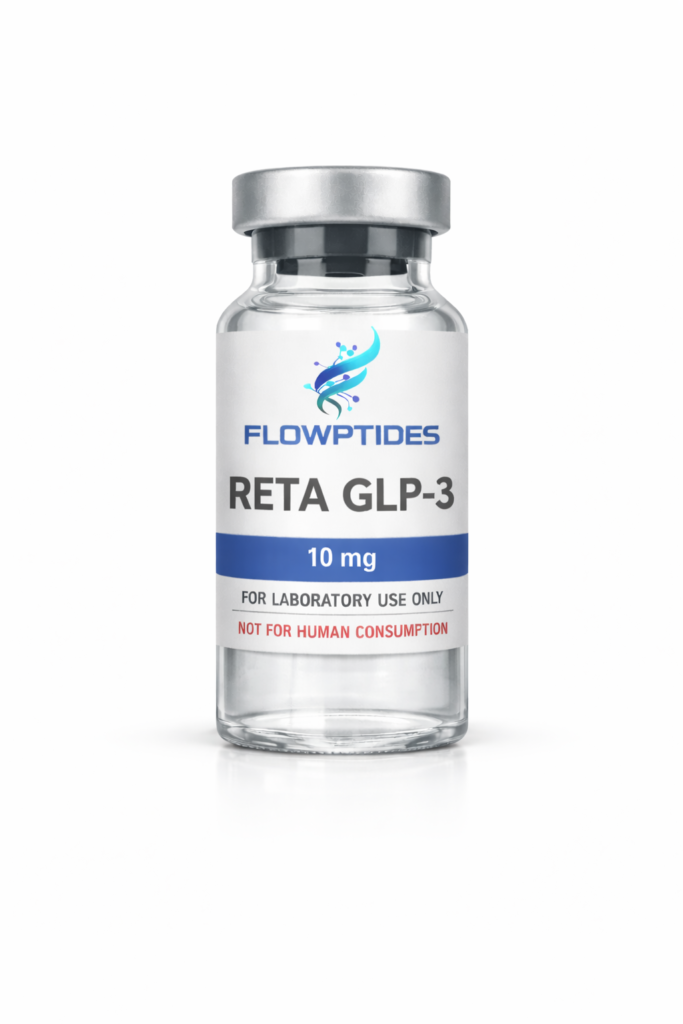
Retatrutide, often referred to as RETA, is a novel peptide currently being studied for its potential role in metabolic regulation and weight management. It is considered a multi-receptor agonist, meaning it interacts with several biological pathways involved in appetite and metabolism.
In research settings, RETA has attracted attention due to its unique mechanism and potential impact on energy balance.
How Does Retatrutide Work?
Retatrutide is designed to target multiple receptors related to metabolic function, including those associated with GLP-1, GIP, and glucagon pathways.
By interacting with these systems, RETA may influence appetite regulation, energy expenditure, and how the body processes nutrients.
This multi-pathway approach is one of the key reasons it has become a focus in metabolic research.
Potential Research Areas
In laboratory and clinical studies, Retatrutide has been explored for:
- Appetite regulation
- Body weight and fat metabolism
- Energy expenditure
- Glucose metabolism
These areas continue to be investigated, and findings are still evolving.
Research Status
Retatrutide is currently under active research, including clinical trials. While early data has generated interest, further studies are required to fully understand its long-term effects and safety.
Conclusion
Retatrutide represents a new direction in metabolic research due to its multi-receptor activity. As studies continue, more insights may emerge regarding its potential applications.
Disclaimer
This content is for informational and research purposes only. These compounds are not approved for human consumption and are intended strictly for laboratory research use.